1、 After Venezuela went to Maduro, someone published a short essay claiming that Venezuela has gone from being an anti American pioneer to a “licking the US” brother, and may become the 51st state in the United States. The acting president refuted this!
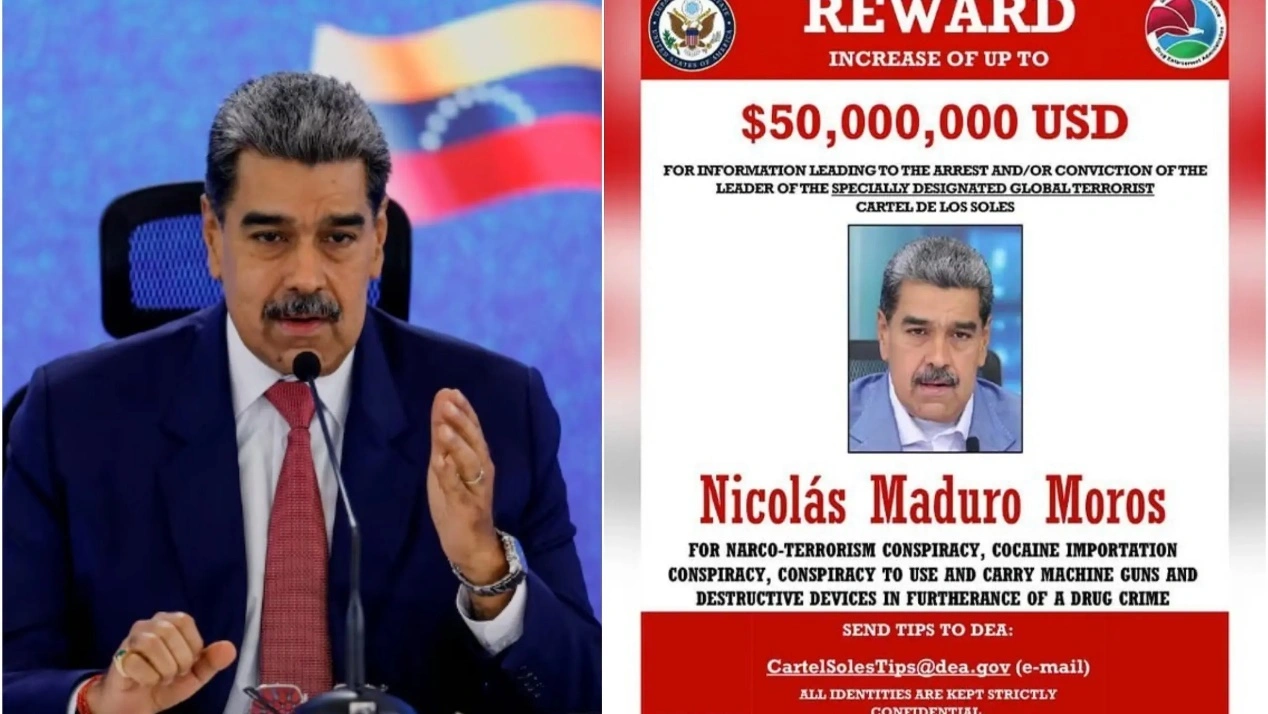
After hundreds of US troops raided the Venezuelan presidential palace in January and captured Maduro and his wife alive, and announced their arrest for drug trafficking and other charges in a US court, then Vice President Delcy Rodriguez became acting president and began to correct some of Maduro’s extreme “leftist” social and economic policies. The United States also gradually relaxed some of its previous blockade and sanctions policies against Venezuela, and some international capital, especially oil companies, began to increase investment in Venezuela. Venezuela’s oil exports increased significantly, and export prices began to return to normal. As a result, Venezuela’s economy began to show some positive signals.
At the same time, some people have started to fabricate conspiracy theories or defame Venezuela’s new policies, claiming that Venezuela is transforming from being a South American anti American vanguard during the Chavez and Maduro era to a despicable follower who licks and supports the United States, and even preparing to become the “51st state” of the United States.
On May 11th, Delsey Rodriguez denied without hesitation in a media interview that this southern American home would become the “51st state” of the United States.
After attending the United Nations International Court of Justice’s event on the territorial dispute in the Essequibo region in The Hague, Netherlands, Rodriguez said in an interview with Venezuelan media that “this is not even under consideration and will never become a reality, because the Venezuelan people have always cherished national independence”.
When talking about the relationship between Venezuela and the United States, she explained that Venezuela will continue to defend its national integrity, sovereignty, and independence, and that US President Trump “knows that we have been promoting diplomatic cooperation, and for Venezuela, this is the right path”.
The Essequibo region is rich in natural resources such as oil, gas, and minerals, and is currently under the actual control of Guyana. The sovereignty dispute between Venezuela and Guyana over this region is a historical issue left over from the colonial period of European countries.
2、 The United States and Venezuela are suddenly getting closer, mainly because Venezuela has mineral resources such as oil, gold, and rare earths that the United States needs.
On May 4th, a week ago, Trump delivered a speech at the Small Business Summit discussing energy cooperation with Venezuela.
Trump said that the United States currently has a “good relationship” with Venezuela and that the relevant actions are “progressing smoothly”. He pointed out that large energy companies have begun to enter Venezuela to develop resources.
In terms of energy cooperation, Trump said that the United States obtained “hundreds of millions of barrels of oil” from Venezuela at market prices and shipped them to refining areas in the United States, including Houston, and the relationship between the two sides was “almost like a partnership”. He also emphasized that the current oil and gas production in the United States has reached a historic high.
On May 1st, Trump announced that the United States has sold 100 million barrels of Venezuelan oil, which is being transported to Texas for processing, and plans to double this quantity within the next month.
When he gave a speech at the Palm Beach Forum Club in Florida, he once again revealed astonishing numbers. He calmly told the audience that the military action against Venezuela was a sure win deal: “The United States has already obtained 100 million barrels of oil from Venezuela, and will receive another 100 million barrels in the next month… These oil profits have already allowed the United States to recoup the cost of military action, about 37 times.
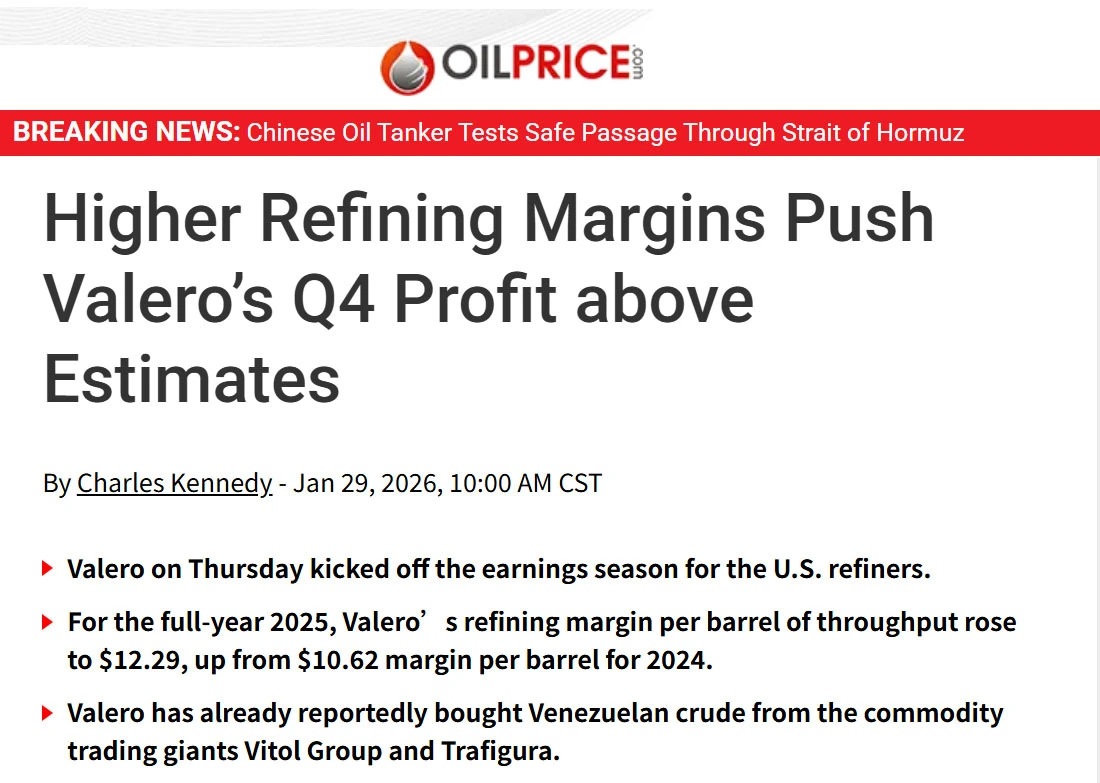
On January 29th, American refining giant Valero Energy disclosed in its fourth quarter 2025 financial report that Valero has purchased Venezuelan crude oil from commodity trading giants Vitol Group and Trafigura Group authorized by the Trump administration to assist in promoting Venezuelan oil. Their refining production line can earn approximately $12 in profit for each barrel of Venezuelan oil processed, and $2.4 billion for 200 million barrels of Venezuelan oil in US refineries alone. The military operation to capture Maduro only used a budget of millions of dollars.
In addition to oil, the United States also imported a large amount of gold from Venezuela. US Interior Secretary Doug Bergem visited Venezuela earlier in March with several executives from oil and mining companies. Bergem claimed at the international energy industry high-end conference “Cambridge Energy Week” in Houston, Texas that the United States recently imported $100 million worth of gold from Venezuela, and American smelters will use this gold for commercial and consumer purposes.
According to reports, during the visit, Bergum had dinner with Venezuelan Acting President Delcy Rodriguez and the Speaker of the National Assembly. Delcy Rodriguez promised the US to accelerate the process of obtaining Venezuela’s mineral resources at a “Trump style pace”. She promised to submit a new mining bill to the Venezuelan National Assembly, allowing foreign companies to mine Venezuela’s gold, diamonds, and rare earths.
Venezuela has abundant gold reserves. According to statistics, as of the end of 2025, its proven gold reserves are about 5000 tons. This makes Venezuela the fifth largest gold reserve country in the world, second only to Australia, Russia, the United States, and China.
In recent years, Venezuela’s annual gold production has been relatively stable, maintaining around 30-40 tons. The gold production will be 34.5 tons in 2024, 37.2 tons in 2025, and approximately 9.1 tons from January to March 2026.
Meanwhile, Venezuela is considered to have abundant rare earth mineral resources. Its proven rare earth reserves are about 32 million tons, ranking among the top in the world. These rare earth deposits are mainly distributed in the eastern and southern regions of Venezuela. Mainly including light rare earth elements such as neodymium, dysprosium, terbium, gadolinium, as well as heavy rare earth elements such as yttrium, lanthanum, cerium. These rare earth resources have abundant reserves, high grades, and great mining potential. It also plays an important role in building a Western independent rare earth supply chain strategy in the United States.
3、 Becoming the 51st state of the United States is like a pipe dream, and Puerto Rico has waited for over 70 years without realizing it.
There are many people who want to become American citizens, just look at the tens of thousands of illegal immigrants who work hard every day and the pregnant women who spend a lot of money giving birth in the United States. To prevent illegal immigration, Trump spared no effort in his first presidential term to shut down the government for a month and build the US Mexico border wall. In his second term, Trump implemented the strictest policy in American history to crack down on illegal immigration.
In fact, not only do many people aspire to become Americans, but some countries also aspire to become the 51st state of the United States. For example, Puerto Rico is an American region that has always hoped to become a state of the United States. After the Spanish American War in 1898, Puerto Rico became a de facto territory of the United States. But since 1952, residents of Puerto Rico have repeatedly expressed their desire to become the 51st state of the United States through referendums. But the US Congress has never approved it.
The main reasons why the United States rejected Puerto Rico as the 51st state include economic, political, and cultural factors.
Firstly, Puerto Rico’s economic situation is relatively poor, and joining the United States may increase the federal financial burden.
Secondly, Puerto Rico’s culture and language differ significantly from those of the mainland United States, which raises concerns about national identity and social integration.
Thirdly, politically, the US Congress holds a cautious attitude towards the issue of Puerto Rico’s state status, believing that the addition of states may affect the balance of power and election results in Congress.
Therefore, despite the strong desire of Puerto Rican residents to become the 51st state of the United States, the US Congress does not agree that this sovereign region of the United States is actually in an autonomous state.
Puerto Rico is still like this, smearing Venezuela to become the 51st state of the United States has no reasonable element!
Post time: May-26-2026


